
-min.jpg)
-min.jpg)


.avif)





Building with a Smaller Carbon Footprint
Discover how ARTISTA reduced its embodied carbon footprint through lower-impact construction methods, locally developed materials, and design decisions considered from the very beginning.
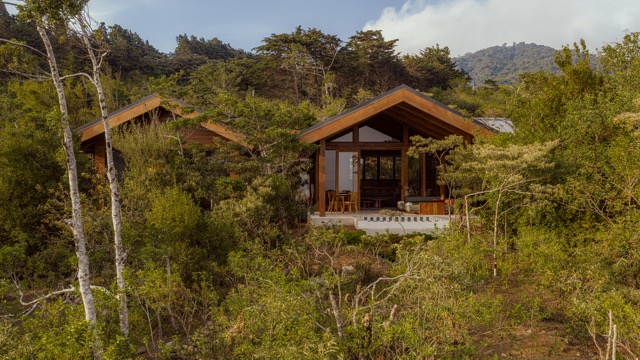
A building’s environmental footprint begins long before its doors open. It is shaped by decisions that guests may never see: which materials are used, where they are made, how far they travel, and how the building itself comes together.
At ARTISTA, reducing that footprint was considered from the very beginning.
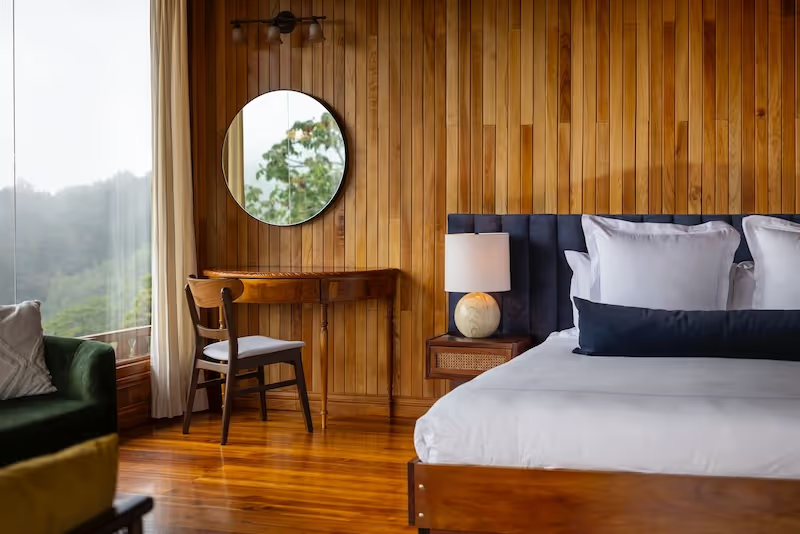
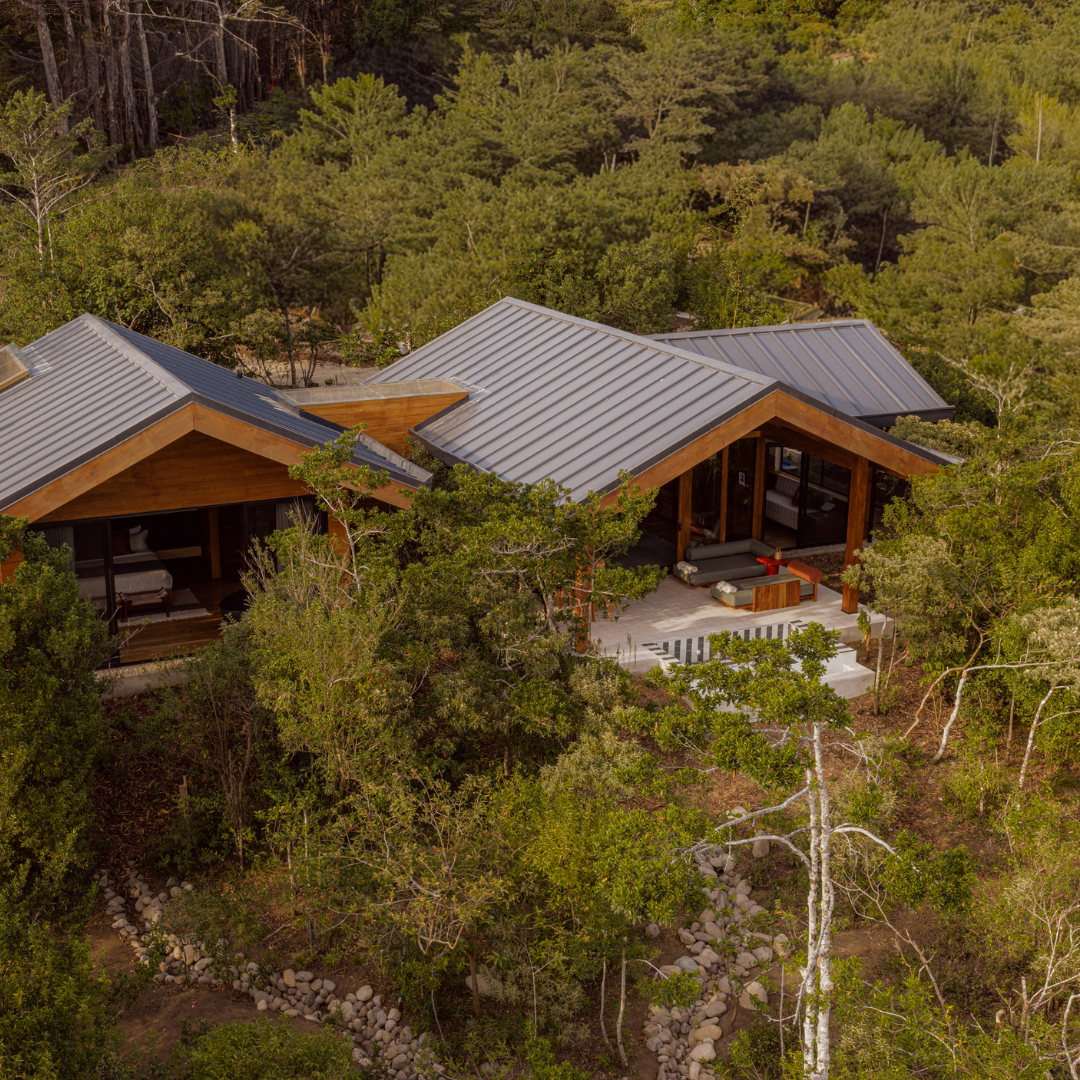
Rather than relying exclusively on conventional construction methods, the project explored lower-impact alternatives. Across most of the villas, traditional concrete-block walls and steel structures were replaced with lighter timber-based systems. An existing structure was also preserved and adapted for staff areas instead of being demolished and rebuilt.
Material choices followed the same approach. ARTISTA incorporates Costa Rican-developed solutions such as Bagapanel and Bagacal, made using agricultural fibers and by-products including sugarcane bagasse, alongside finishes selected with their environmental impact and indoor conditions in mind.
The result is measurable: ARTISTA achieved 40.8% less embodied carbon than a conventional building across the material production, transportation and construction stages measured, excluding biogenic carbon.
For us, regenerative hospitality means considering impact from the very beginning. Many of those decisions start with something tangible: the materials themselves—where they come from, how they are made, and the stories behind them.
Continue reading → Materials with a Story
Continue reading → Art Rooted in Place
Continue reading → Designed for Nature and Wellbeing


.svg)
