
-min.jpg)
-min.jpg)


.avif)





5 Things to Know Before Visiting Monteverde
Discover what makes Monteverde so extraordinary, from its rare cloud forest and rich biodiversity to the ever-changing weather, landscapes, and wildlife that define this unique region of Costa Rica.
5 Things to Know Before Visiting Monteverde
There are places that are beautiful because of a single defining feature: a beach, a mountain range, a particular view.
Monteverde is different.
What makes Monteverde special is the way geography, climate, biodiversity, and constant change come together in one remarkably small part of Costa Rica. Clouds move directly through the forest. Water flows toward two different oceans. Thousands of plant species grow within ever-shifting microclimates, while hundreds of bird species move between the canopy, mountain ridges, and valleys.
The result is a destination that rarely looks or feels exactly the same twice.
A clear morning can become wrapped in mist within hours. A distant ridge can disappear behind the clouds and slowly return. The forest changes with the light, the rain, the wind, and the seasons.
These are five of the reasons Monteverde feels unlike almost anywhere else.
1. Monteverde Is Part of One of the Rarest Ecosystems on Earth
Monteverde is famous for its cloud forest, but these mist-shrouded ecosystems are remarkably rare.
Tropical cloud forests cover only about 0.26% of the Earth's land surface. They occur in very specific conditions, usually at higher elevations where warm, moisture-rich air rises along mountain slopes, cools, and forms clouds and mist.
In Monteverde, that mist moves directly through the forest canopy.
Moisture collects on leaves, mosses, orchids, branches, and roots in a process known as horizontal precipitation. Instead of receiving water only through rainfall, the forest can capture moisture directly from the clouds passing through it.
That helps create the cool, humid environment visitors immediately associate with Monteverde: moss-covered trees, ferns unfolding beneath the canopy, water collecting on leaves, and mist drifting between branches.
It also means that the clouds are not just background scenery.
They are an essential part of the ecosystem!
The moisture they bring helps sustain the plants, wildlife, streams, and watersheds that make this region so biologically rich.
Walking through Monteverde, then, is not simply walking through a tropical forest on a cloudy day. It is experiencing an ecosystem whose existence is closely tied to the presence and movement of those clouds.
2. Monteverde Sits on the Continental Divide
One of Monteverde's most fascinating characteristics is almost invisible when you are standing in the forest.
The region lies along Costa Rica's Continental Divide, the mountainous boundary that separates watersheds flowing toward opposite sides of the country.
Rain falling on one side ultimately moves toward the Pacific Ocean. On the other side, water flows toward the Caribbean.
In other words, within the same mountain landscape, water can begin journeys toward two different oceans.
This geography also helps shape Monteverde's distinctive climate.
Moisture arriving from the Caribbean interacts with winds and weather systems moving across the mountains, creating rapidly changing conditions and a remarkable variety of microclimates.
Walk a relatively short distance and the temperature, wind, humidity, vegetation, and visibility can begin to change.
It is one reason Monteverde can feel so dynamic.
The Continental Divide does not simply split the landscape geographically. It helps create the conditions that allow so many different forms of life to exist close together.
It also gives the forests of Monteverde an importance that extends far beyond what visitors can see from a trail or viewpoint. The moisture captured high in the mountains eventually becomes part of rivers and watersheds that continue far beyond the cloud forest.
3. More Than 400 Bird Species Have Been Recorded Across the Region
Monteverde is one of Costa Rica's most celebrated destinations for birdlife.
More than 400 bird species have been recorded in the region, an extraordinary number for such a compact mountainous area.
Some are permanent residents. Others migrate across countries or move between different elevations throughout the year.
Among the best known is the Resplendent Quetzal, a bird that has become almost synonymous with the cloud forests of Central America. Its brilliant green plumage can appear and disappear among the foliage with surprising ease.
The Three-wattled Bellbird is another unmistakable Monteverde resident. Often heard before it is seen, its distinctive call carries across the forest canopy.
But experiencing birdlife in Monteverde is not only about finding famous species.
It is the hummingbirds moving between flowers. The sudden call coming from somewhere high in the canopy. The movement of a branch that makes you stop walking and look more closely.
The region's position on the Continental Divide contributes to this richness. Different habitats and climatic conditions exist within a relatively small area, allowing species associated with both Pacific and Caribbean environments to meet within the greater Monteverde landscape.
For birders, that diversity can turn a morning walk into hours of observation.
For everyone else, it becomes part of the soundtrack of being here.
4. Monteverde Is Home to More Than 2,500 Plant Species
The biodiversity of Monteverde becomes even more remarkable when you begin looking at the plants.
More than 2,500 plant species have been documented across the region, from towering trees to orchids, bromeliads, mosses, ferns, and countless smaller species growing throughout the forest.
In a cloud forest, plants do not exist only at ground level.
Look upward and entire communities are growing above you.
Branches become miniature gardens covered with mosses and epiphytes — plants that grow on other plants without taking nutrients from them. Orchids emerge from the canopy. Bromeliads collect water between their leaves. Ferns and vines fill the spaces between trunks and branches.
The constant moisture provided by mist creates ideal conditions for this layered vegetation.
It also changes the experience of walking through the forest.
The beauty is not limited to panoramic views. Much of it appears in details: the texture of moss on bark, droplets collecting along the edge of a leaf, tiny plants growing from a fallen tree, or the almost impossible number of shades of green visible within a few meters.
This abundance of plant life also forms the foundation for everything around it.
Plants provide food, shelter, nesting sites, moisture, and habitat for birds, mammals, amphibians, insects, and countless other organisms.
In Monteverde, biodiversity is not a collection of separate species.
It is a network.
5. The Landscape Can Transform Within Hours
Perhaps the easiest thing to notice about Monteverde is how quickly it changes.
You may wake to a clear view stretching across the mountains and find the same landscape completely hidden by clouds later that afternoon.
Mist moves across ridgelines.
Sunlight disappears.
Rain passes through.
Then a break in the clouds reveals a mountain you could not see moments earlier.
Sometimes the transformation happens over the course of a day. Sometimes it happens within minutes.
This unpredictability is one of the reasons no two experiences of Monteverde feel exactly alike.
The seasons create larger changes throughout the year. Drier months tend to bring more frequent clear mornings and expansive views, while the green season often intensifies the lushness of the forest and brings more dramatic combinations of rain, mist, and sunlight.
But even those patterns are never absolute.
Monteverde remains a cloud forest.
Weather moves quickly through the mountains, and the landscape responds just as quickly.
For travelers accustomed to thinking of good weather and bad weather as opposites, Monteverde offers another perspective.
A cloud covering the view is not necessarily hiding the experience.
Sometimes it is the experience.
Watching a mountain disappear into mist can be every bit as memorable as seeing it beneath a completely clear sky.
Experiencing Monteverde From Hotel Belmar
At Hotel Belmar, the changing landscape has always been part of the experience.
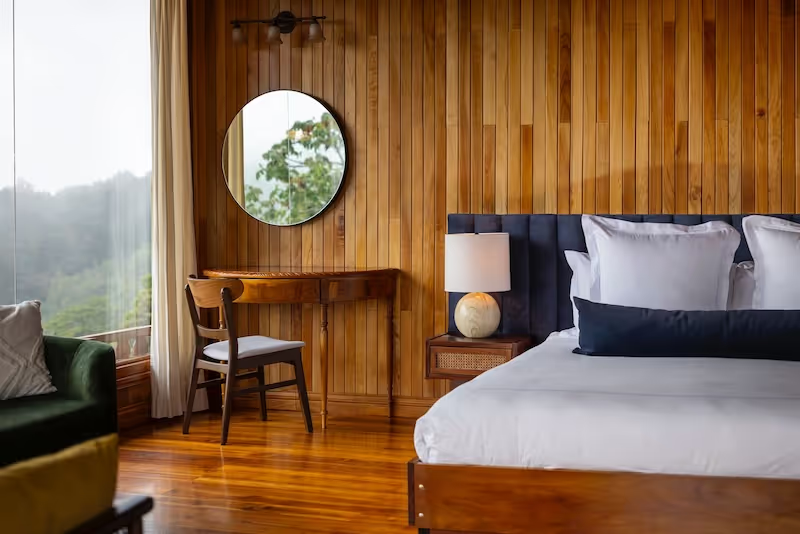
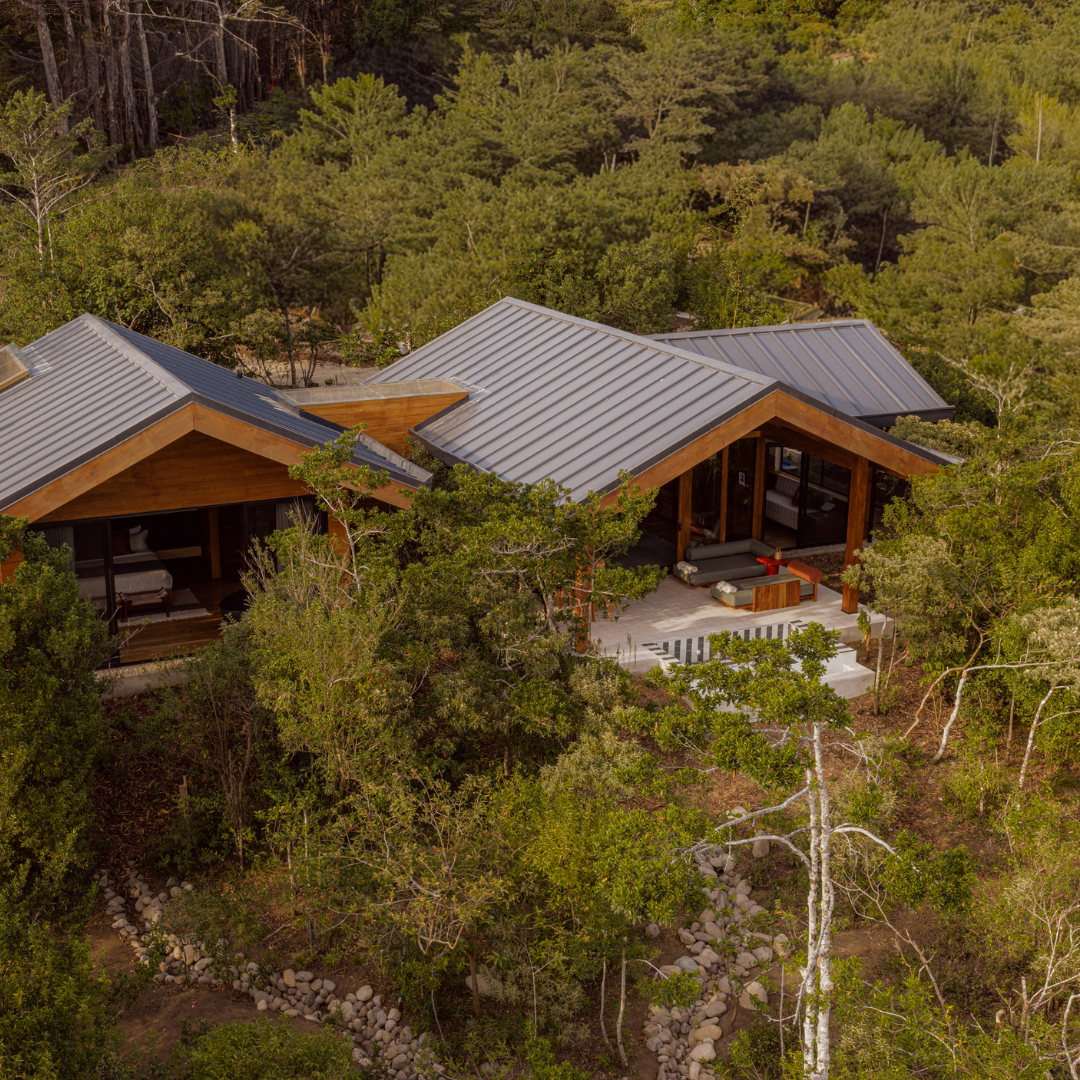
Panoramic windows, terraces, gardens, forest trails, and open views toward the mountains create opportunities to notice Monteverde throughout the day rather than encounter it only during a scheduled excursion.
A clear morning may invite an early walk outdoors. Clouds may roll through while you are having breakfast. Afternoon rain can transform the view from your terrace. As the weather clears, distant ridges may slowly return.
The same forces that shape the cloud forest also shape the rhythm of a stay here.
Our connection to Monteverde is rooted in the idea that the landscape does not need to be controlled to be enjoyed. Sometimes the most meaningful experiences come from paying attention to what nature happens to be doing at that particular moment.
That might mean spotting a bird from the trail, noticing how the forest smells immediately after rain, watching mist move between the mountains, or simply realizing that the view outside your window has changed completely since morning.
What Makes Monteverde Special?
There is no single answer.
It is the rarity of the cloud forest.
It is standing on a mountain range where water travels toward two oceans.
It is hearing birds calling through a forest that supports more than 400 recorded species.
It is discovering a landscape filled with thousands of different plants, many growing above the forest floor.
And it is watching all of these elements shift as clouds, rain, wind, and sunlight move through the mountains.
Monteverde is special because it is never entirely still.
The forest is continually responding to the conditions around it, and every visit captures only one moment in that ongoing transformation.
You may arrive expecting a particular view, a particular bird, or a particular kind of weather.
Monteverde may give you something completely different.
And very often, that is the part you remember.


.svg)
